By: Leslie Hacker, VP of CPRS Vancouver, Founder of Hacker Communications
What makes being part of CPRS Vancouver so rewarding is the chance to connect, learn, and leave every event with new insights to strengthen our work.
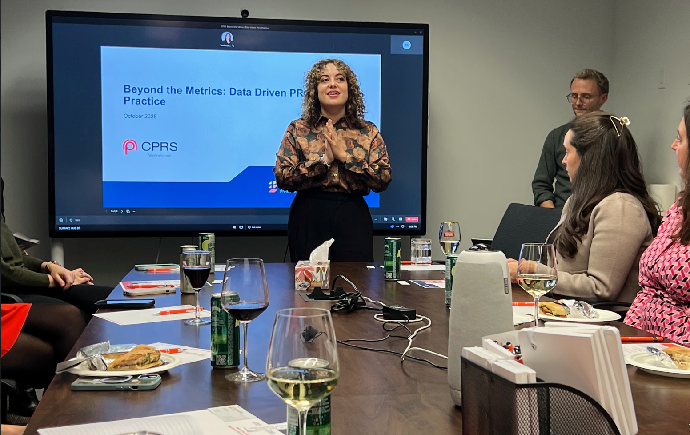
At our first professional development event of the new chapter year, Dr. Gregor Sharp, Senior Consultant at Earnscliffe Strategies, led an eye-opening session on the evolving role of data in public relations. His message was clear: in a world flooded with information, it’s not about having more data, it’s about having better data and using it to tell honest, human stories.
Three key takeaways stood out: data builds trust, impact matters more than reach, and numbers need narratives. When used thoughtfully, data helps communicators uncover what people genuinely care about, measure what truly matters, and bring both credibility and heart to every story we tell.
Here are my top 10 takeaways from the event:
1. Data Builds Trust
In today’s noisy, polarized landscape, credible data helps communicators build trust internally with leadership and externally with audiences. It validates instincts, sharpens strategy, and allows us to uncover what people truly care about.
“Data doesn’t replace intuition; it refines it.”
2. Measure What Matters
Communicators are under pressure to show results, not just reach. Instead of vanity numbers, focus on meaningful metrics such as awareness, sentiment, conversion, and credibility. Real impact is found in outcomes, not output.
3. Balance Numbers and Narratives
The foundation of credible PR is opinion research, and it’s strongest when quantitative and qualitative insights work together.
-
Quantitative shows what’s happening, i.e., what people care about.
-
Qualitative explains why it matters, i.e., why they care.
Used together, they turn data into understanding.
4. Learn to Spot “Trash Data”
Not all data is good data. Be skeptical of perfect dashboards and inflated success rates. Ask:
-
Who collected it, and why?
-
Were the questions neutral?
-
Are “don’t know” responses included? (Sometimes that’s the story.)
And always remember: misinformation can look confident, but credible data looks careful.
5. Start Research Early (and Sell It In)
Research should guide creative strategy, not just validate it afterward. Integrating audience insights early saves time, budget, and unnecessary revisions later.
When leadership asks, “Where do we start?”, begin small: a light qualitative pulse to surface hypotheses, then a short quantitative survey to size them. Framing research as risk reduction and budget efficiency makes buy-in much easier.
6. Let Insights Shape the Message
Data should never sit idle in a spreadsheet; it should actively shape how, when, and to whom we communicate. Tailor messages to the mindset of the audience, not internal preference, and stay agile as sentiment shifts.
The same insights that drive campaign strategy can also generate newsworthy headlines. Use data to educate clients, guide storytelling, and power earned media opportunities rooted in truth.
7. Stay Curious (Even When the Data Disagrees)
Dr. Sharp reminded us to welcome uncomfortable truths. One of his examples, uncovered through Indigenous Insights, Earnscliffe’s syndicated study of Indigenous opinion in Canada, is that among some Indigenous communities, shared and community-based housing was valued more than homeownership – a sharp contrast to many campaign assumptions.
The takeaway: let the data tell its own story, even when it challenges your own.
“The truth is complicated, and so is the audience.”
8. Design Research Thoughtfully
Good data starts with good design.
-
Ask unbiased, transparent questions
-
Share your methodology and margins of error
-
Be honest about what your data can and can’t prove
Credibility begins long before analysis; it starts with clarity, curiosity, and transparency.
9. Move from Insight to Action
Data alone doesn’t change minds; people do.
Identify audience values, understand their barriers, and use credible, empathetic messages to inspire one small, clear action at a time.
Remember the “mushy middle,” the persuadable segment that can shift either way. This group can often be the most responsive with the right messenger, framing, and evidence.
10. Use Data to Make PR More Human
Ultimately, data isn’t just about numbers; it’s about people. When we pair the truths it reveals with empathy and expertise, we create measurable, meaningful, and deeply human communications.
“Even when the data surprises you, it’s giving you a gift: the truth.”
About the Speaker
Dr. Gregor Sharp is a Senior Consultant at Earnscliffe Strategies. He brings a depth of research experience across the academic, government, and private sectors in Canada and abroad. With formal training in quantitative and qualitative methods, he’s known for innovative approaches to discourse analysis and his ability to make complex findings accessible and actionable.
Fluently bilingual, Gregor has led projects with diverse local, national, and international stakeholders on topics ranging from refugee resettlement to international security practices. He holds a PhD in Political Science from UBC and a Master’s in International Public Management from Sciences Po Paris.
.png.aspx?width=400&height=531 "Screenshot-2025-11-19-at-8-06-58 PM-(1).png")